

Orofacial Myofunctional Disorders
What are Orofacial Myofunctional Disorder (OMDs)?
Orofacial Myofunctional Disorders are atypical, adaptive patterns that emerge in the absence of normalized patterns within the orofacial complex. The regular presence of these adaptive movements can often result in a variety of disturbances.
Examples of Orofacial Myofunctional Disorders include one or a combination of the following:
- Thumb and finger sucking habits
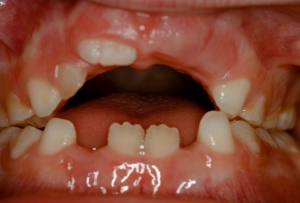
- A routine habit of resting with the lips apart
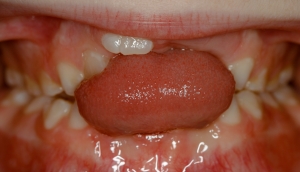
- A forward resting posture of the tongue between or against the teeth
- Tongue Thrust
- Other harmful oral habits
Orofacial Myofunctional Disorders are often related to, or can contribute to a variety of medical and dental disorders. These disorders can include:
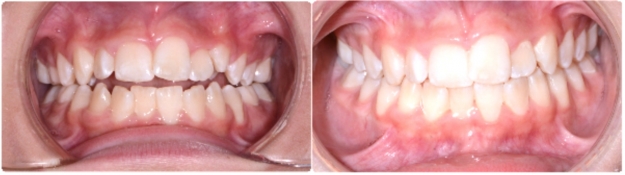
- Malocclusion (improper alignment of the teeth)
- Periodontal disorders
- Orthodontic relapse
- Changes associated with abnormal jaw growth and position
Image Library
Click on the titles below to view the image of the Orofacial Myofunctional Disorder
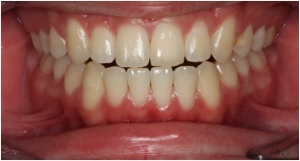
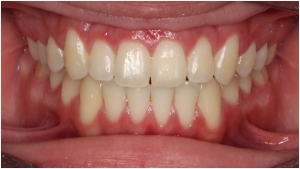
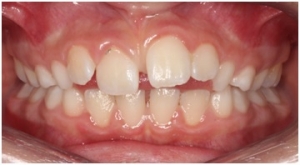
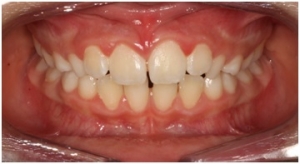
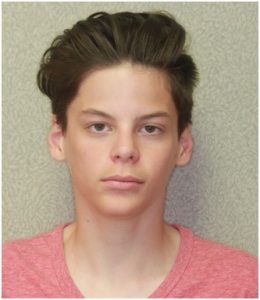
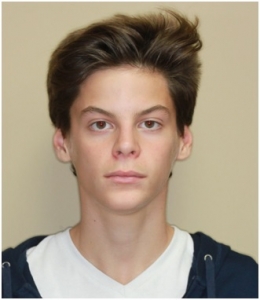
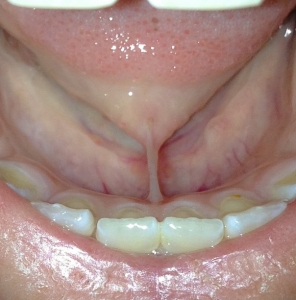
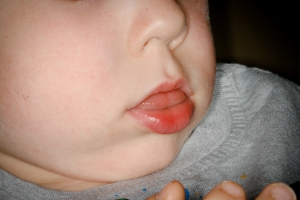
What are some of the causes of Orofacial Myofunctional Disorders?
It is often difficult to isolate a particular source as the sole cause of an Orofacial Myofunctional Disorder and in most cases, it can be result of a combination of factors. Many experts suggest that OMDs may develop as a result from the following:
- A restricted nasal airway due to enlarged tonsils/adenoids, deviated septum, and/or allergies.
- Improper oral habits such as thumb or finger sucking, cheek/nail/cuticle biting, teeth clenching/grinding, and tongue, lip or cheek sucking
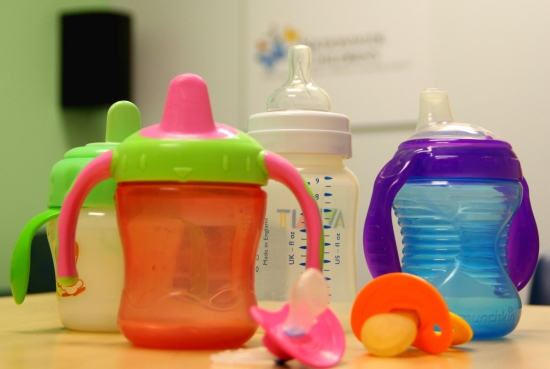
- Extended use of a pacifier and/or long-term use of sippy cups
- Structural or physiological abnormalities which may include a short lingual frenum (tongue-tie)
- Neurological deficits and developmental delays
- Hereditary predisposition
The most commonly noted etiology of an OMD is a lack of nasal breathing. When nasal breathing is impeded, the body naturally accommodates by relying on mouth breathing. Long-term mouth breathing changes the natural resting position of the jaw, tongue and lips. This change in position can influence growth patterns of the jaw and maxilla and often result in the development of significant malocclusion. Furthermore, long term mouth breathing compromises the natural process of breathing which relies on the nasal airway to cleanse and purify air for the pulmonary system.
It is crucial to first address what may be contributing to the persistence of an Orofacial Myofunctional Disorder before beginning treatment, as treatment may not be successful if the etiology persists. A Certified Orofacial Myologist can help you to determine what may be contributing to its presence, and can help refer you to the appropriate clinicians to address these concerns.
The following is a guideline as it relates to orofacial myofunctional disorders (OMDs) and the various age ranges:
Infants and Babies:
While orofacial myofunctional disorders (OMDs) may be identified throughout the lifespan, orofacial myofunctional therapy is not applicable to infants or babies, due to the need for active involvement in the therapy process. However, recognizing these issues early and making the appropriate referrals to qualified specialists are preventative for worsening problems that may occur later in life. This includes issues such as mouth breathing, tethered oral tissues, and orofacial muscle tone issues. The referral and/or treatment of patients may be provided by an interdisciplinary healthcare team that includes COM®s, dentists, pediatricians, oral surgeons, ENTs, body work professionals and lactation consultants.
Toddlers and Preschoolers:
Orofacial myofunctional disorders (OMDs) in this age group may include issues with breathing, chewing, the oral preparatory phase of swallowing, tethered oral tissues, and oral rest postures. The preschool age group is an ideal time to address noxious parafunctional habits, such as thumbsucking or pacifier use, by utilizing habit elimination programs. Therapists use a non-invasive, positive reinforcement program to help eliminate these habits without the use of oral appliances. This age range requires compliance from the parent as well as the child. The treatment of patients may be provided by an interdisciplinary healthcare team that includes COM®s, dentists, oral surgeons, ENTs, sleep medicine specialists, and body work professionals.
School-aged Children and Adults:
This is a large range of ages and common issues include mouth breathing, tethered oral tissue restrictions, poor oral rest postures, and difficulty with chewing and the oral preparatory phase of swallowing. In this age range, patients may also be undergoing orthodontic treatment. Myofunctional therapy is an integral part of orthodontics and may shorten orthodontic treatment time, as well as preventing orthodontic relapse. Those patients experiencing TMJ pain and dysfunction, obstructive sleep apnea (OSA), or upper airway resistance syndrome (UARS) may also benefit from orofacial myofunctional therapy as part of an interdisciplinary plan of care. The older the patient, the more they may have developed compensations over time related to breathing, swallowing, and speech patterns. The treatment of patients may be provided by an interdisciplinary healthcare team that includes COM®s, dentists, oral surgeons, sleep medicine specialists, ENTs, and body work professionals.
While a lips apart resting posture is often a result of nasal airway obstruction, once the airway obstruction is corrected the lips-apart pattern remains a persistent habit that must further be addressed
Why be concerned about OMDs?
Orofacial Myofunctional Disorders interrupt normalized movement patterns. Orthodontists have documented their concerns about OMD’s since the early 1900’s. Failure to address an OMD can result in:
- Long term mouth-breathing patterns that compromise overall healthy breathing
- Establishment of detrimental oral habits that impede further growth and development
- Establishment of atypical patterns that impact chewing and swallowing
- The improper development/alignment of the teeth
- The improper development of jaw growth and facial structure
- Slowing the process of orthodontic treatment
- Undermining the long-term stability of orthodontic treatment, resulting in malocclusion relapse
- Negatively impacting the stability and function of the temporomandibular joint (TMJ)
- Speech distortions
- Negatively affecting social relationships due to open mouth postures or noisy chewing and swallowing patterns
A variety of peripheral pain issues like chronic facial, neck and back pain; headaches; tooth grinding and clenching; as well as temperomandibular joint dysfunction (TMJD or TMD) have also been associated with OMD’s, as have episodes of tinnitus and vertigo.
Improper tongue position has also been associated with some sleep disordered breathing patterns.
Many individuals with OMD’s have been reported to have early delays in the area of feeding and swallowing. Picky eating patterns often emerge as a result of the lack of oral coordination needed in the first three years of life. Since OMD’s are typically associated with jaw, tongue and lip movement, speech patterns can also be impacted.
What Can Orofacial Myofunctional Therapy Accomplish?
Orofacial Myofunctional Therapy involves an individualized program to help the patient retrain these adaptive patterns of muscle function, and to create and maintain a healthy orofacial environment. Treatment goals may include the following:
- Normalize tongue and lip resting postures
- Establish nasal breathing patterns
- Eliminate improper chewing and swallowing patterns
- Stabilize the dentition from extraneous orofacial muscle movement
- Address harmful oral habits including:
- Prolonged pacifier use
- Thumb and/or finger sucking
- Fingernail, cheek, or lip biting
- Tongue sucking
- Clenching or grinding of the teeth
Benefits of Orofacial Myofunctional Therapy may include:
- Correcting and improving tongue and lip postures which can aid in the development of normal patterns of dental eruption and alignment.
- Assisting in the stabilization of the teeth during and/or after orthodontic treatment or jaw surgery
- Identifying the need and referring for Speech treatment. Supporting the remediation of speech errors differently than some traditional methods (when working with a speech language pathologist trained in Orofacial Myology).
Treatment is often a collaborative process with a variety of medical and dental specialists. A Certified Orofacial Myologist® can help you determine what may be contributing to the presence of an OMD, and can help refer you to the appropriate clinicians to address these concerns.
What is the difference between a Certified Orofacial Myologist (COM®) and an Orofacial Myologist?
A Certified Orofacial Myologist is an individual who has gone above and beyond taking an introductory course in Orofacial Myology and has undergone a rigorous certification process which includes both a written and an onsite clinical examination process. All Certified Orofacial Myologists remain accredited through the IAOM and participate in recurrent continuing education courses to access the most current science and treatment methodologies available.
An Orofacial Myologist is a professional with a speech-language pathology, dental or dental hygiene clinical background who undergoes introductory coursework in the etiology and treatment of Orofacial Myofunctional Disorders.
The IAOM has been certifying professionals in the proper diagnosis and treatment of oral myofunctional disorders since 1972 and is the only international professional accrediting organization for this therapeutic specialty.
How prevalent are Orofacial Myofunctional Disorders?
Research indicates in various populations, a prevalence of 38% in the general population to 81% in children exhibiting speech/articulation problems.
How effective is Orofacial Myofunctional Therapy?
There are many factors that contribute to the success of the therapy program. Effective communication and cooperation between therapist and the dental and medical community is essential. In addition, the patient’s desire, dedicated cooperation and self-discipline are necessary, as well as support from others. To ensure optimum results with children undergoing therapy, parental involvement and encouragement is important and necessary.
Orofacial Myofunctional Therapy has helped thousands of individuals in dozens of countries. Numerous studies have demonstrated its effectiveness in the treatment of Orofacial Myofunctional Disorders. These studies have shown that Orofacial Myofunctional Therapy can be 80-90% effective in correcting rest posture, swallowing and other oral functions, and that these corrections are retained years after completing therapy.
We’re Here To Help!
Find a Certified Orofacial Myologist®